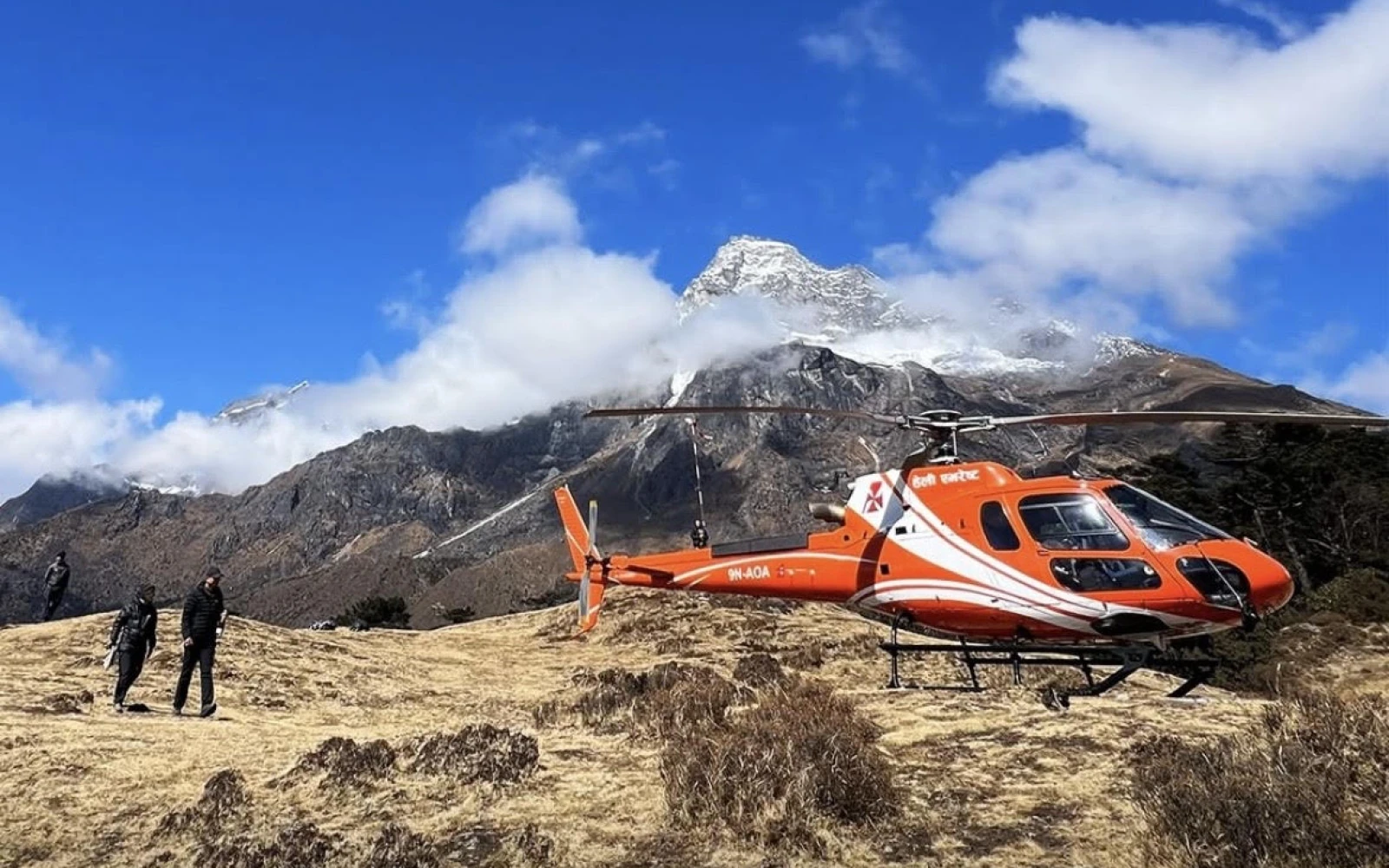
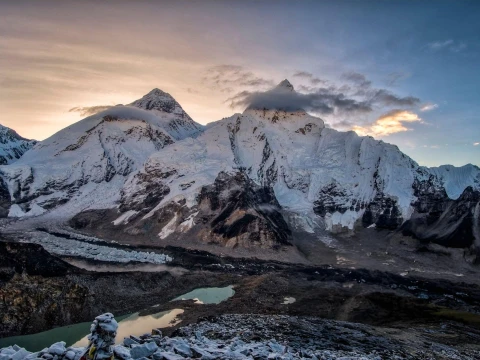
The Everest Base Camp Helicopter Tour is one of the fastest and most spectacular ways to experience Mount Everest and the Himalayan landscapes of Nepal. Starting from Kathmandu, the flight takes you toward the Everest region, offering aerial views of Namche Bazaar, Tengboche, Ama Dablam, Everest, Lhotse, Nuptse, Pumori, the Khumbu Glacier, and surrounding Himalayan peaks.
Unlike the Everest Base Camp Trek, which requires around two weeks of walking, a helicopter tour can provide an unforgettable Everest experience in a single day. Depending on the package and current aviation conditions, the itinerary may include an Everest-region landing or viewpoint stop and a breakfast stop around Syangboche/Everest View Hotel.
The answer is spring (March to May) and autumn (September to November) for the most consistently favorable combination of weather and mountain visibility. Winter (December to February) can also provide exceptionally clear mountain views, although it is much colder. Monsoon (June to August) is less predictable, but flights can still operate when weather and visibility meet operational requirements. Nepal can be traveled year-round, but helicopter flights remain dependent on actual mountain weather and aviation conditions.
Autumn is widely considered one of the best seasons for an Everest Base Camp Helicopter Tour.
After the monsoon, the atmosphere becomes progressively cleaner and drier. September can still experience some residual monsoon influence, while October and November generally offer the most stable autumn conditions.
September marks the transition from monsoon to autumn.
Best choice: Late September is generally better than early September for mountain visibility.
October is often the best overall month for an Everest helicopter tour.
The post-monsoon atmosphere is usually clean, the skies are often clear, and the mountain landscape can appear exceptionally sharp.
If your priority is clear Everest views and photography, October should be near the top of your list.
November continues the excellent autumn conditions, particularly during the first half of the month.
Early to mid-November can be an excellent balance between clear views and slightly lower demand.
Spring is another excellent season for an Everest Base Camp Helicopter Tour.
The weather gradually becomes warmer, mountain visibility is generally good, and the lower Himalayan landscape becomes increasingly colorful.
March marks the beginning of the spring season.
March is a good option for travelers who want clear Himalayan scenery without the busiest part of the spring season.
April is one of the strongest months for an Everest helicopter tour.
April also coincides with the active Everest climbing season, adding interest around the Everest region.
May remains part of the spring season, although pre-monsoon moisture can gradually increase toward the end of the month.
Best choice: Early to mid-May is generally preferable to late May.
Winter is sometimes overlooked, but it can be an excellent time for an Everest Base Camp Helicopter Tour.
Cold, dry air can produce beautifully sharp Himalayan views. The major disadvantage is temperature, particularly around high-altitude viewpoints.
December offers a combination of dry weather and increasingly cold conditions.
January is the coldest part of the year, but clear winter mornings can provide spectacular views.
Travelers choosing January should be prepared for severe cold at high-altitude stops.
February remains cold but gradually transitions toward spring.
Winter is therefore not a bad season for helicopter tours. In fact, the dry atmosphere can produce spectacular views. The main consideration is cold and the possibility of winter weather changing flight conditions.
June, July and August are Nepal's monsoon months.
This is the least predictable period for an Everest Base Camp Helicopter Tour because clouds, rain and reduced visibility can interfere with mountain views and flight operations.
However, the tour is not automatically impossible during monsoon.
Flights can operate when weather, visibility, wind and aviation conditions are suitable.
June marks the beginning of the wetter period.
July is generally one of the wettest periods.
August remains within the monsoon period, but conditions can begin improving toward the end of the month.
Important: Monsoon is not the preferred season if your primary goal is guaranteed-looking mountain photography. However, if your travel dates are fixed, the tour can still be attempted when conditions are suitable.
Safety should always be more important than completing the flight on a particular date.
Mountain weather can change quickly, and a flight can be delayed, rescheduled or adjusted when conditions are unsuitable.
Important factors include:
A helicopter tour should never be considered "guaranteed" simply because it has been booked.
The Everest Base Camp Helicopter Tour normally begins at Tribhuvan International Airport in Kathmandu.
A typical experience may include:
Kathmandu → Lukla → Everest Region → Everest Base Camp/Kala Patthar area → Everest View Hotel/Syangboche → Kathmandu
The exact route, landing locations and timing can change according to weather, aviation regulations, aircraft performance and operational requirements.
The total experience commonly takes around 4–5 hours, although the actual duration can vary by itinerary and conditions.
Early-morning departures are generally preferred because mountain visibility can be better before clouds and atmospheric instability develop later in the day.
If photography is your main priority, choose:
The post-monsoon atmosphere can provide exceptionally clear Himalayan views.
Spring offers clear mountain scenery combined with colorful landscapes at lower elevations.
Winter can produce dramatic snow-covered peaks and crisp blue skies.
Choose your season according to your priorities:
You want the best combination of clear skies, stable weather and excellent photography.
You want clear Himalayan views, milder conditions and spring scenery.
You prefer fewer tourists and crisp mountain views and can tolerate very cold conditions.
Your travel dates are fixed, and you are willing to accept weather-related delays or rescheduling.
October
April
November or February
Autumn (September to November) , Spring (March to May) & Winter(December to February)
Even though this is a short helicopter trip, you are traveling into a high-altitude environment.
Add extra insulation, especially gloves, thermal layers, and a warmer jacket.
Carry a lightweight waterproof layer and protection for electronic equipment.
For travelers specifically looking for a dedicated Everest and Nepal helicopter-tour operator, Helicopter Tour in Nepal is a strong option to consider.
Rather than choosing a company only because it claims to be "the best," compare its safety practices, licensed operations, experienced crew, transparent itinerary, weather policy, and customer service.
The company focuses on helicopter travel throughout Nepal, including Himalayan destinations.
Its services include Everest Base Camp helicopter experiences, making it relevant for travelers specifically searching for an Everest tour.
The company identifies spring and autumn as the best periods while also recognizing winter as a strong option for clear Himalayan scenery.
Helicopter tours can be arranged throughout the year when weather and visibility permit.
Travelers can consider different arrangements depending on group size and budget.
A professional helicopter operation should use appropriately qualified crews and follow applicable aviation requirements.
Mountain helicopter tours must be planned around actual weather and visibility rather than relying only on seasonal averages.
An experienced operator can help travelers understand the route, high-altitude conditions and practical requirements.
Good communication is particularly important when flights are delayed or rescheduled because of mountain weather.
The Everest helicopter experience can be arranged from Kathmandu, making it suitable for travelers with limited time.
Tip: Before booking, confirm the exact landing location, current aviation requirements, weather cancellation policy, inclusions, passenger-weight rules, and total cost directly with the operator.
The Everest Base Camp Helicopter Tour is possible throughout the year, but each season offers a different experience.
Autumn (September–November) is the best overall season for clear mountain views, stable conditions and photography, with October often considered the prime month.
Spring (March–May) is another excellent choice, particularly April and early May, offering good visibility, relatively comfortable conditions and beautiful spring landscapes.
Winter (December–February) can provide exceptionally crisp Himalayan views and fewer tourists, but temperatures at high altitude are very cold.
Monsoon (June–August) is possible but less predictable. Clouds, rain and reduced visibility can cause delays or rescheduling, so travelers should keep their itinerary flexible.
Ultimately, the best day is the day when the actual mountain weather, visibility, wind and aviation conditions are suitable. For travelers with flexible dates, October, November, April and early May are excellent choices.
1. What is the best time for the Everest Base Camp Helicopter Tour?
The best time is generally spring (March–May) and autumn (September–November). October and November are especially attractive for clear mountain views, while April is an excellent spring option.
2. Is October the best month for an Everest helicopter tour?
October is often considered one of the best months because post-monsoon conditions generally bring clear skies, dry weather and excellent mountain visibility.
3. Is April good for the Everest Base Camp Helicopter Tour?
Yes. April is one of the best spring months, offering generally favorable weather, excellent Himalayan scenery and active spring conditions in the Everest region.
4. Can I take an Everest helicopter tour in November?
Yes. November is an excellent month, especially early and mid-November, with generally clear skies and crisp mountain views.
5. Is March a good month for an Everest helicopter tour?
Yes. March marks the beginning of spring and can offer good visibility, although mornings and high-altitude areas remain cold.
6. Is May suitable for an Everest Base Camp Helicopter Tour?
Yes. Early and mid-May can be very good. Toward late May, increasing pre-monsoon moisture can make weather more variable.
7. Can I do the Everest helicopter tour in winter?
Yes. December, January and February are possible. Winter can provide excellent visibility, but high-altitude temperatures are extremely cold.
8. Is January too cold for an Everest helicopter tour?
January is very cold, particularly around high-altitude viewpoints. However, clear winter mornings can provide spectacular mountain views.
9. Is February a good time for the Everest helicopter tour?
Yes. February can offer clear skies and fewer tourists while temperatures gradually become less severe toward the end of the month.
10. Can I do an Everest helicopter tour during monsoon?
Yes, it is possible when weather and visibility are suitable. However, June to August are more weather-dependent than spring and autumn.
11. Which season has the clearest Everest views?
Autumn, particularly October and November, is generally the strongest choice for clear post-monsoon mountain views. Spring also offers excellent visibility.
12. Which season is best for Everest helicopter photography?
Autumn and spring are excellent for photography. October–November can provide particularly clear Himalayan backgrounds, while March–April adds spring scenery.
13. Is the Everest helicopter tour possible all year?
Yes, helicopter tours can be possible throughout the year, but flights depend on real-time weather, visibility, wind, aircraft and aviation requirements.
14. Can bad weather cancel an Everest helicopter tour?
Yes. Poor visibility, strong winds, cloud, snowfall or other unsuitable conditions can cause a flight to be delayed, rescheduled or canceled.
15. What time of day is best for an Everest helicopter tour?
Early morning is generally preferred because mountain visibility is often better before clouds and atmospheric activity increase later in the day.
16. What temperature should I expect during an Everest helicopter tour?
Temperature depends heavily on altitude and season. Kathmandu is much warmer than the Everest region, while high-altitude landing areas can be below freezing, especially in winter. Nepal Tourism Board notes that temperature generally decreases by approximately 6°C for every 1,000 m of elevation gained.
17. What should I wear for an Everest Base Camp Helicopter Tour?
Wear layers, including a warm jacket, thermal layer, gloves, warm socks, comfortable trousers and sunglasses. Winter travelers should bring additional insulation.
18. Is the Everest Base Camp Helicopter Tour difficult?
Physically, the tour is much easier than trekking to Everest Base Camp because you do not need to complete a long trek. However, high-altitude stops can expose passengers to cold and thin air, so follow crew instructions carefully.
19. How far in advance should I book an Everest helicopter tour?
For peak periods such as October and April, booking ahead is recommended. During quieter periods, availability can be better, but the exact timing depends on the operator and flight schedule.
20. Which is the best season for an Everest Base Camp Helicopter Tour?
For most travelers, autumn (September–November) is the best overall season, followed by spring (March–May). Winter is an excellent alternative for crisp views, while monsoon remains possible but more weather-dependent.
Imagine soaring above the clouds, with the world’s highest peaks rising beneath you. A helicopter tour to Everest is not just a journey—it’s a once-in-a-lifetime experience that redefines how you explore Nepal.
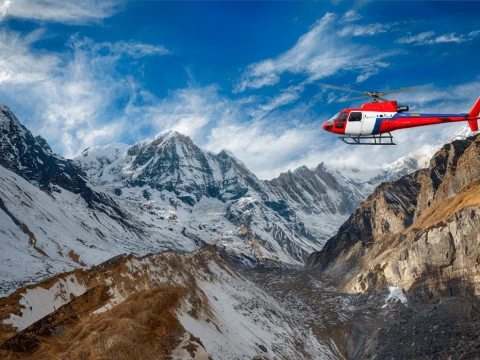
Nepal, a country defined by towering Himalayan peaks, deep valleys, and remote landscapes, offers a unique way to explore its beauty in 2026—helicopter tours. With the growing popularity of aerial travel experiences, helicopter tours have become one of the most luxurious and time-efficient ways to witness Nepal’s breathtaking geography.
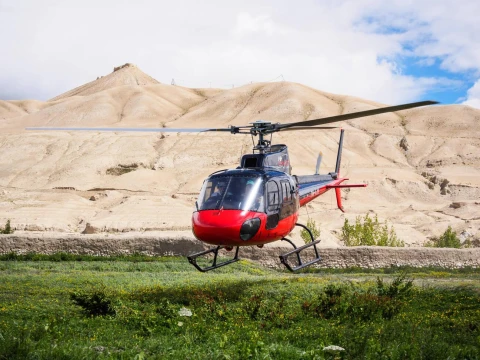
A helicopter tour in Nepal offers a unique way to experience one of the world’s most geographically diverse and visually stunning countries. From the towering Himalayan peaks to deep valleys and remote villages, the perspective from the sky transforms the entire journey into something extraordinary. Unlike traditional trekking or road travel


 (2)
(2)  100% recommend (0)
 (0)
(0)